สีปกติ
 ขาวดำ
ขาวดำ ดำ-เหลือง
The National Drug System Development Committee is moving forward with the implementation of the national drug system development plan through eight subcommittees. The initiative will expand access to more than 40 essential medicines, introduce a more agile vaccine management mechanism, and promote Thai-developed innovative medicines. These measures are expected to generate savings of more than THB 2.6 billion per year for the government.
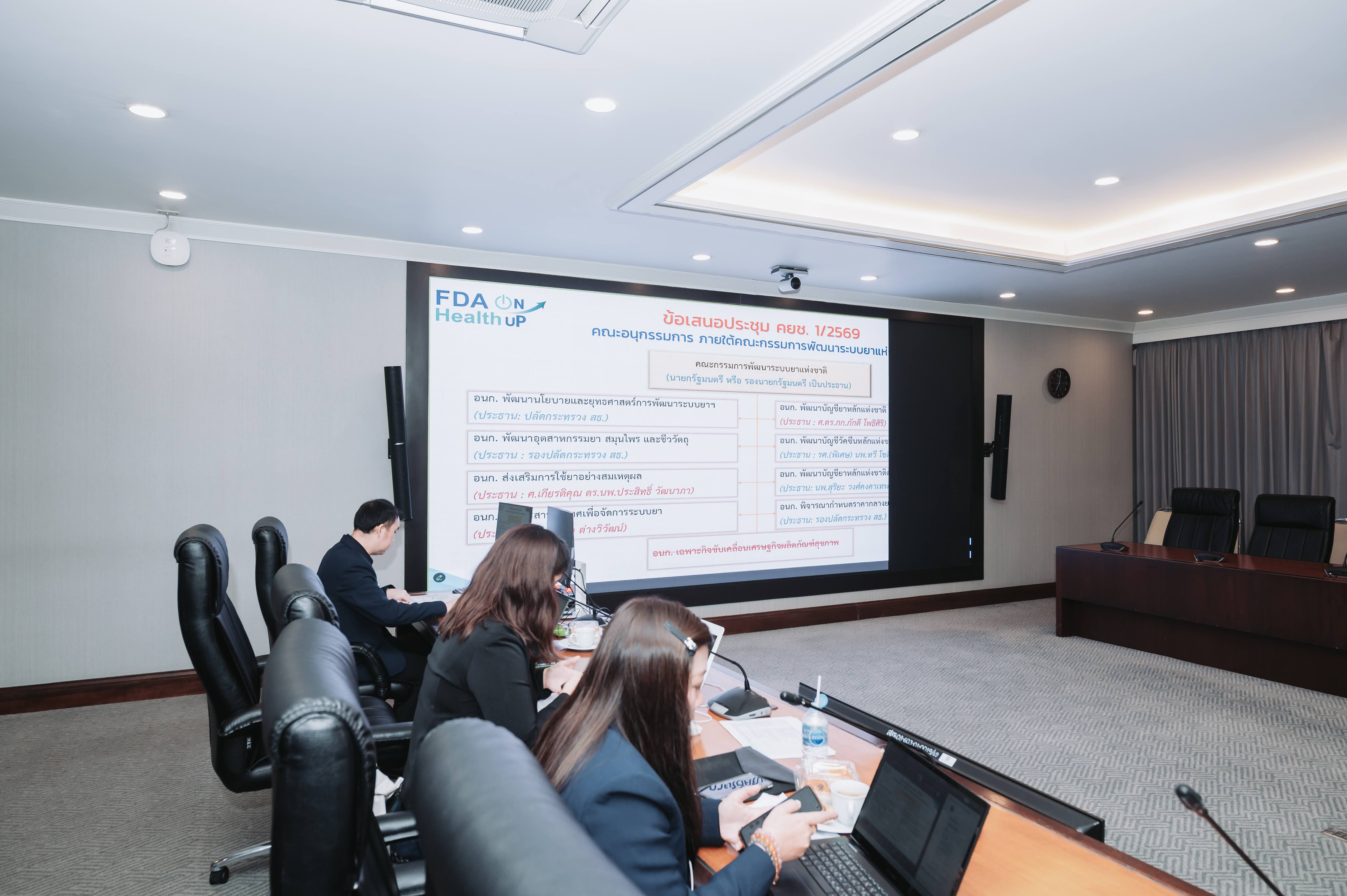
Mr. Phatthana Phromphat, Minister of Public Health, revealed that today (5 March 2026) he had been assigned by Mr. Sophon Saram, Deputy Prime Minister, to chair the meeting of the National Drug System Development Committee. The meeting resolved to approve the appointment of eight subcommittees to replace the previous set whose terms had expired. These subcommittees will serve as an important mechanism for driving the National Drug System Development Plan B.E. 2566–2570 (2023–2027) toward concrete outcomes through integrated collaboration with all relevant sectors.
In addition, the meeting approved improvements to the country’s vaccine management mechanism. Under the revised approach, vaccines that have been considered by the Subcommittee on the Development of the National Vaccine List may be announced for inclusion in the National List of Essential Medicines immediately. This will enable state agencies and local administrative organizations to procure vaccines according to necessity without having to wait for budget consideration by health funds. The change is expected to reduce procedural steps, enhance the flexibility of the system, and allow people to access vaccines more rapidly.
Ms. Supattra Boonserm, Secretary-General of Food and Drug Administration, in her capacity as secretary to the Committee, further stated that with regard to improving access to essential medicines, the meeting approved the inclusion of more than 40 items in the National List of Essential Medicines. These additions cover important diseases and patient groups requiring specialized care, including:
- Paliperidone long-acting injectable, for more than 1,300 psychiatric patients in high-risk groups;
- Emicizumab, for the prevention of bleeding episodes in more than 440 children and adolescents with hemophilia A; and
- Fomepizole, an antidote for the treatment of methanol poisoning.

The meeting also endorsed the expanded use of 30 additional innovative medicines researched and developed domestically, including sitagliptin for the treatment of diabetes. This measure is expected to save the government more than THB 2.6 billion per year. It reflects the country’s growing capacity for pharmaceutical self-reliance and strengthens long-term medicine security. At the same time, Thailand continues to advance Rational Drug Use (RDU Country) in order to improve safety, reduce the risks associated with inappropriate medicine use, and enhance health outcomes for the public.
Mr. Phatthana emphasized in closing that the Government places serious importance on strengthening the country’s medicine security, both by expanding equitable access to essential medicines and vaccines and by supporting domestic research and development. He also called on all sectors to work together to drive the Thai drug system toward tangible and sustainable results, ensuring that the public has access to quality and safe medicines.
**************************************************
Publication dates 5 March 2026